Robin Color Palette
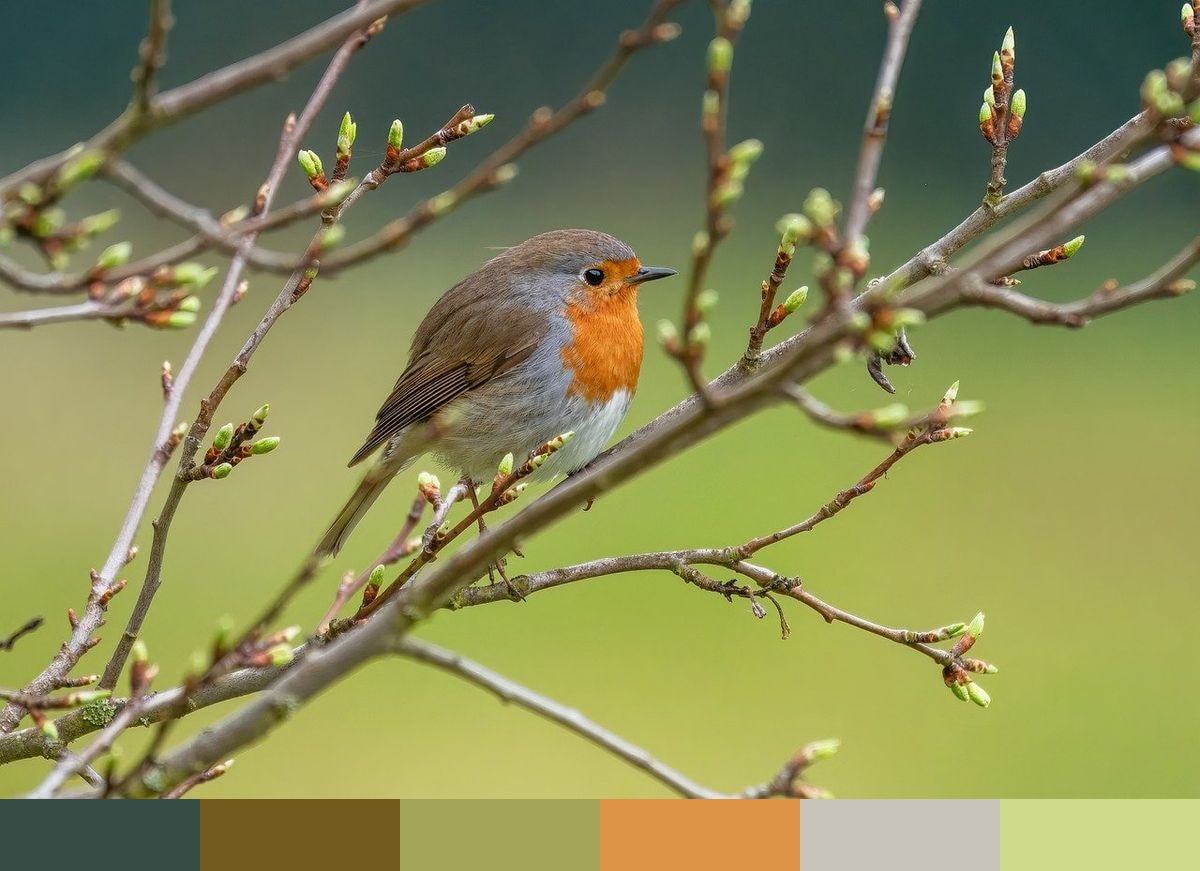
This palette comes from a nature photograph by fotoblend showing a European robin — one of the most familiar garden birds — perched on a branch or twig. The robin's iconic orange-red breast doesn't appear as a dominant extracted shade here; instead the palette captures the surrounding scene: deep forest teal in the shaded background, warm umber and terracotta from the branch and the bird's warm flanks, and a striking chartreuse-yellow-green from the surrounding bokeh foliage.
Credit: fotoblend on Pixabay
Colors in This Palette
The six shades — deep teal (#374C44), umber (#735B1D), olive-gold (#A2A457), terracotta (#DC9346), warm gray (#C8C4B9), and chartreuse (#CEDA88) — span the full tonal range of a woodland scene in warm natural light. The deep teal is the darkest value and functions as a dark background or body text color. The umber and terracotta tones carry the mid-range warmth, while the olive-gold and chartreuse are the most vibrant shades — drawn from the sun-lit leaves behind the bird.
Sponsors
This palette is distinctly botanical and autumnal in character. The combination of muted greens, earthy ambers, and warm gray reads naturally in garden lifestyle branding, organic food packaging, outdoor apparel, and any context celebrating the natural world. The deep teal (#374C44) is especially strong as a brand anchor color — sophisticated and nature-inspired without leaning toward the predictable blues and greens of standard environmental branding.
The chartreuse (#CEDA88) is the palette's highest-energy color and should be used sparingly as an accent or highlight. It pairs elegantly with the deeper teal and umber tones, echoing the way afternoon sunlight catches leaf edges in a garden setting. Use the warm gray (#C8C4B9) for large neutral areas and the terracotta as a secondary accent to keep compositions grounded in warmth.